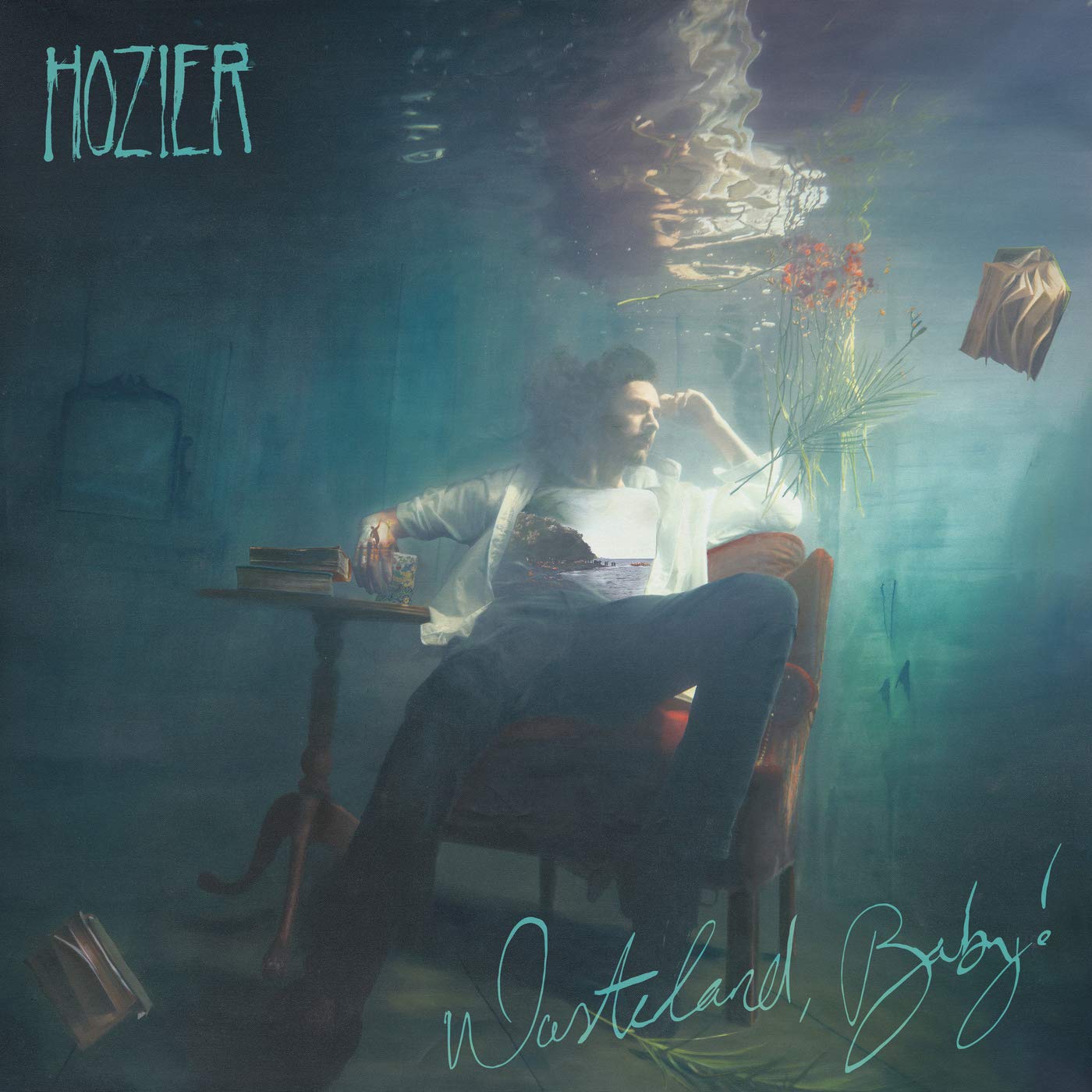
Wasteland, Baby! is Hozier’s second studio album and a particular favourite for me, the powerful meanings and incredible vocals make quite the masterpiece of an album.
Wasteland, Baby was released in 2019 and T.S Eliot’s The Wasteland is the namesake and poem that loosely inspired the foundation of the album. The poem speaks to the decay and mortality of mankind, themes that remain present in the album. Unlike his self-titled we have the pleasure of hearing Hozier’s voice in collaboration with another, namely Mavis Staples. This review will walk you through the narratives of all 14 songs.
- Nina Cried Power
Here we get to here the incredible combination of Hozier and the vocal powerhouse that is Mavis Staples. Hozier is not afraid of taking a political stance and the repeated lyrics “it’s not the waking, it’s the rising” communicate the much needed message that it is not enough to simply acknowledge discrimination is an issue, you need to stand up and fight against the oppression “straight into the face that tells you to Rattle your chains if you love being free”. The song also takes care to pay tribute to those who have stood up by naming them, re-emphasised through the blues undertone to the music.
2. Almost (Sweet Music)
Almost (Sweet Music) is a tribute to music in itself, particularly those that influenced Hozier himself. The concept of the song is Hozier understanding that his music is built off the foundation of those that came before “the numbered lovers of Duke Ellington” “Chet can sing ‘Let’s Get Lost’”. Perhaps this is why the music is only ever “Almost” sweet as no music a newer artist writes will ever be equal to the original songs that inspire.
3. Movement
The lyricism of this song is almost unmatched by the rest of the album, it speaks of the speaker watching his lover with such precision, analysing their body movements. Desiring to be so in sync with them “so move me, baby”, as if to move with them is to understand them. Further on, the narrator enjoys the freedom of the lover’s movement, even if it serves to create distance between them “I can recall something that’s gone from me”. Their movement is a force of nature he is compelled to follow, if only with his eyes.
4. No Plan
No Plan may speak of renouncing ‘God’s plan’ and living a life of freedom with a lover, there is no religion because humans were made to decide their own fates. “Why would you make out words a cage for your own bird” imploring their lover to see the liberation of releasing themselves, even if life gets messy “awful song be heard”, the strength of the secrets in their relationship will be taken to the grave “if secrets were like seeds…hire a gardener for my grave”. The speaker seeks to live life, with their love, by experiencing it rather than pre-empting it.

5. Nobody
Here the speaker describes the wild, racuous love that they have found, wasting the days “twelve o’clock in Soho” but living an excessive lifestyle at night with their lover “fed gold by sweet fools in Abu Dhabi”. Our narrator is quick to accept that they known this life is messy but they love the fact their partner can “misbehave”, enjoying being free from the burden of facing consequences. He states that “I’ve had no love like your love” revelling in his new found freedom.
6. To Noise Making (Sing)
“Remember when you’d sing” suggests that the recipient of the song has lost their motivation to be a part of the artistic movement that is making music. Although it once brought them “joy” the speaker asks them “to put your emptiness to melody” the void they may feel can be filled once more, if they indulge themselves in music. The repeated chorus of voices “sing”, layered voices and harmonies encourage the person to see beauty in song once more.

7. As It Was
In comparison to previous songs, As It Was slows down the pace of the music we have been experiencing. The speaker yearns once more to be with a lover, “there is a roadway, muddy and foxgloved” foxglove being poisonous but pretty plant highlights what the narrator is willing to put themself through to be reunited with the beauty of their lover. “Make your good love known to me or just tell me about your day”, in whatever shape or form they want nothing more than to experience their lover again, being alone or with another shall compare.
8. Shrike
A reminiscient song, one of regret and appreciation, “I couldn’t utter my love when it counted” they regret the praises they could have song for their lover when in the relationship, only now the speaker is alone have they been able to fully appreciate them “I was housed by your warmth”. They parallel their relationship to the relationship of a shrike, a carnivorous bird, to the thorn, they use to impale their prey. The relationship is not quite symbiotic, the thorn can go on, but the shrike may be starved without the tool of the “sharp and glorious” thorn, the speaker struggles to persist but the lover continues.
9. Talk
Hozier reflects the speaker’s love to the strength of romance between Orpheus and Eurydice, Orpheus went to the Underworld to retrieve his lover, Eurydice, finding he could not bare to be parted from her. The narrator talks of receiving his love highly “I’d be the last shred of truth in the lost myth of true love”, in a postmodern world, he knows what it is to truly love someone. However, the chorus’ reveals the side of the speaker that knows desire that they hide behind the facade of talking “refined”. The gorgeous repeated vocal “Hey yeah” going up an octave reflects the narrator’s yearning for a love that goes beyond what they have previously known.

10. Be
This song, for me, falls most in line with themes present in T.S Eliot’s The Wasteland, where the Earth has to be burned and reborn to be purified of the sin, “and when the earth is trembling on some new beginning”. However, the narrator urges his lover to “be as you’ve always been”, their love may be considered a sin but it is purer than the corrupt reborn world. “When the man that gives the order is born next time ’round on the boat sent back”, the new reborn world provides twists of fate and role reversals, suggested by the idea of someone who is trying to deport people is reborn an immigrant. But the narrator insists they may as well continue loving a they do, because history will inevitably repeat itself.
11. Dinner and Diatribes
Dinner and Diatribes speaks of lust and desire for erotic love. “I’d suffer hell of you’d tell me what’d you do to me tonight” the double meaning suggesting either that waiting for such acts is a form of hell, or that they’s put themselves through hell to have the relief of knowing what their lover will do. The speaker is in a trance the day, as they long for the night to arrive, “scarcely can speak for my thinking”. The frequent “that’s the kind of love, that’s the kind of love” present the extent of their desire and their willingness to face the consequences “be hotel complaints” in order to truly experience their beloved.
12. Would That I
The soft guitar and mellowness of the first verse tells the story of the speaker finding a lover to be like “a willow” but their “withdrawal was the weeping of me”, playing on the name of the tree ‘weeping willow’, although the relationship was happy while it last, ultimately it was not to be. The chorus defies the upset of the first verse, the opt ups of the vocals presenting the joy of his newfound love. “Where I’m set alight” they no longer live in dappled light but in the pure sunlight of overwhelming love. The second verse contrasts the first in the strength of the music and happiness behind the lyrics “my heart rose to its feet”. This new lover has the “would that I’ve loved” in the past, as their relationship is burns away previous hurt or loss.
13. Sunlight
“I would shun the light” as an opening line juxtaposes the title of the song but we quickly understand that sunlight is used as a metaphor for a lover. Despite all attempts, the speaker “flew like a moth” too attracted to the warmth of the sun to turn away. Unable to resist the “sunlight”, they recognise that the longing is everlasting “buried and burning flame”. Accepting that they will happily undergo sacrifice to be close to their lover “the Icarus to your certainty” the metaphor of death highlighting the extent of his love.
14. Wasteland, Baby!
Wasteland, Baby! ultimately encapsulates the themes of the entire album in one song. Our narrator accepts the impending doom of the end of the world “bonfire that burns at all worth in the fight fell too” but despite the unhappy fate they remain “in love”. The lover is “indelible.. unbreaking” even through the “death of the sun” their strength reinstills hope in the speaker, they will persevere, for even the death of the world will not see this relationship to its end.
Overall
All in all Wasteland, Baby seems to be an ode to the beautiful things in life: love, music and nature. It is an album that speaks of love and loss in equal parts, expressing the loneliness of break ups and desire of having something unattainable. It describes an insatiable addiction to lovers and the acceptance that, although love is imperfect it can be fulfilling. The vocals and lyricism makes this album an incredible listen.

 thefoxlorediaries.uk
Leave a comment